
Jul 14, 2026 · first shared on LinkedIn
My agents started running the business. I just approve.
Last week something changed in how the business runs. Not a new tool, not a new hire, but a new shape for the whole thing. I’m one person, and the operation now runs on 13 AI agents. Here’s what a day actually looks like, in plain words.
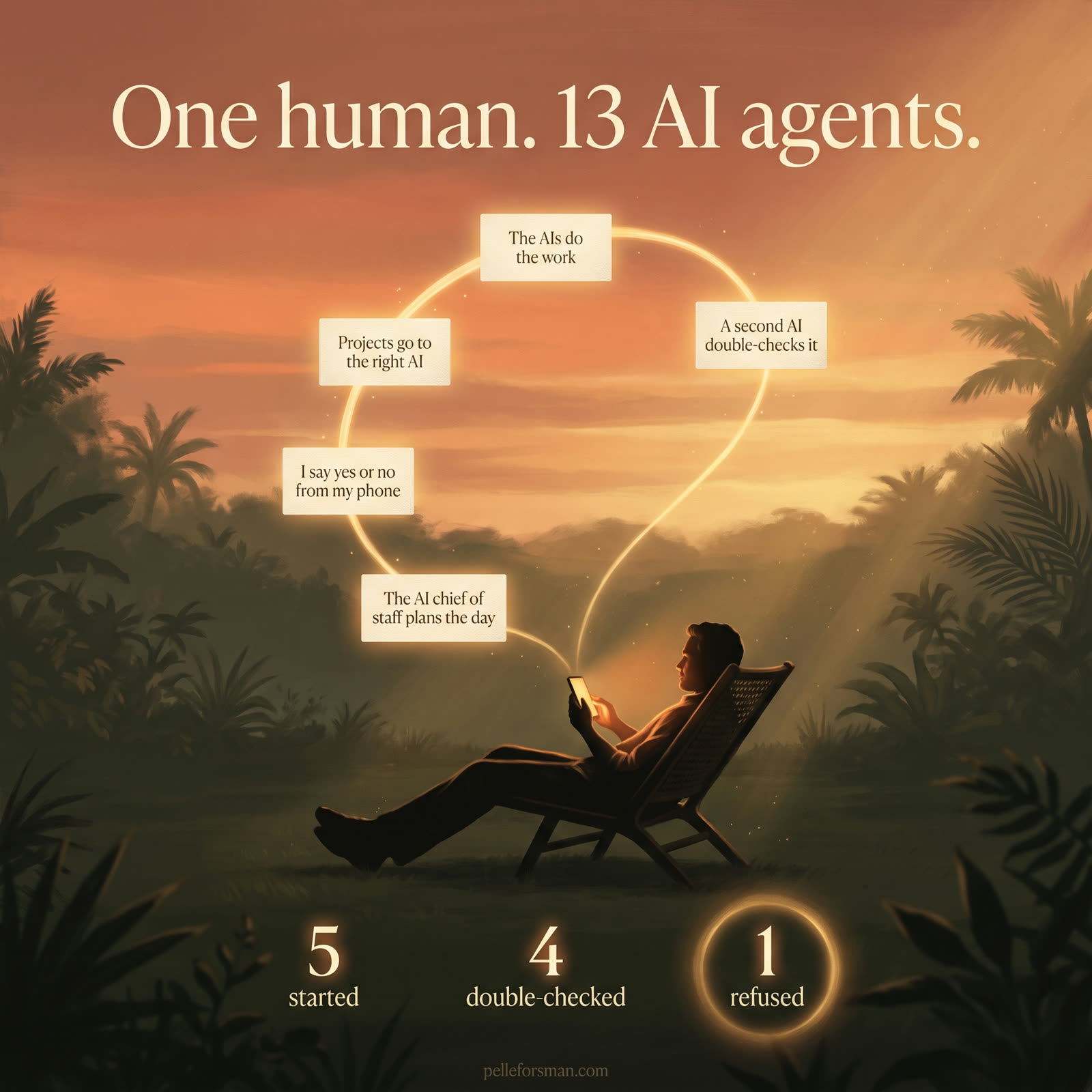
Who does what in the morning?
Every morning, an AI chief of staff, think of it as a very fast operations manager, reads what happened across the business yesterday: what got finished, what’s stuck, what customers did. Then it suggests the day’s projects.
I look at that list on my phone, over coffee, and say yes or no. That’s my first job of the day, and it takes minutes.
What happens after I approve?
Each approved project goes to the right AI agent automatically: one handles the online stores, one writes content, one builds software, one prepares sales offers.
Then comes the rule I care about most: before anything counts as done, a second AI from a different company double-checks the work. The one who builds never grades its own work. Same reason you wouldn’t let a contractor sign off on their own inspection.
Why was a refusal the best result of the week?
The first full day ended like this: 5 projects started, 4 finished and double-checked, and 1 refused, because the instructions it was given were out of date.
That refusal is worth more than the four finished projects. Anyone can get AI to produce things. Getting it to say no to the wrong thing, that’s what makes it safe to hand over real work.
So does it really run “without me”?
Honestly: I still make every decision that matters. Money, publishing, anything a customer sees, nothing moves until I say yes. What changed is that I stopped doing the work between the decisions. My day went from doing to deciding.
I build AI agents that run entire departments, and I document the whole build here, what works and what breaks. If you want the same agents installed in your own business, here’s how we’d work together.