
Jul 14, 2026 · first shared on LinkedIn
13 employees. 1 is human. Here's my org chart.
If you looked at the org chart behind everything I run, it would look normal at first: a founder, an operations manager, five departments. Then you’d notice that out of 13 seats, exactly one is a human. Me.
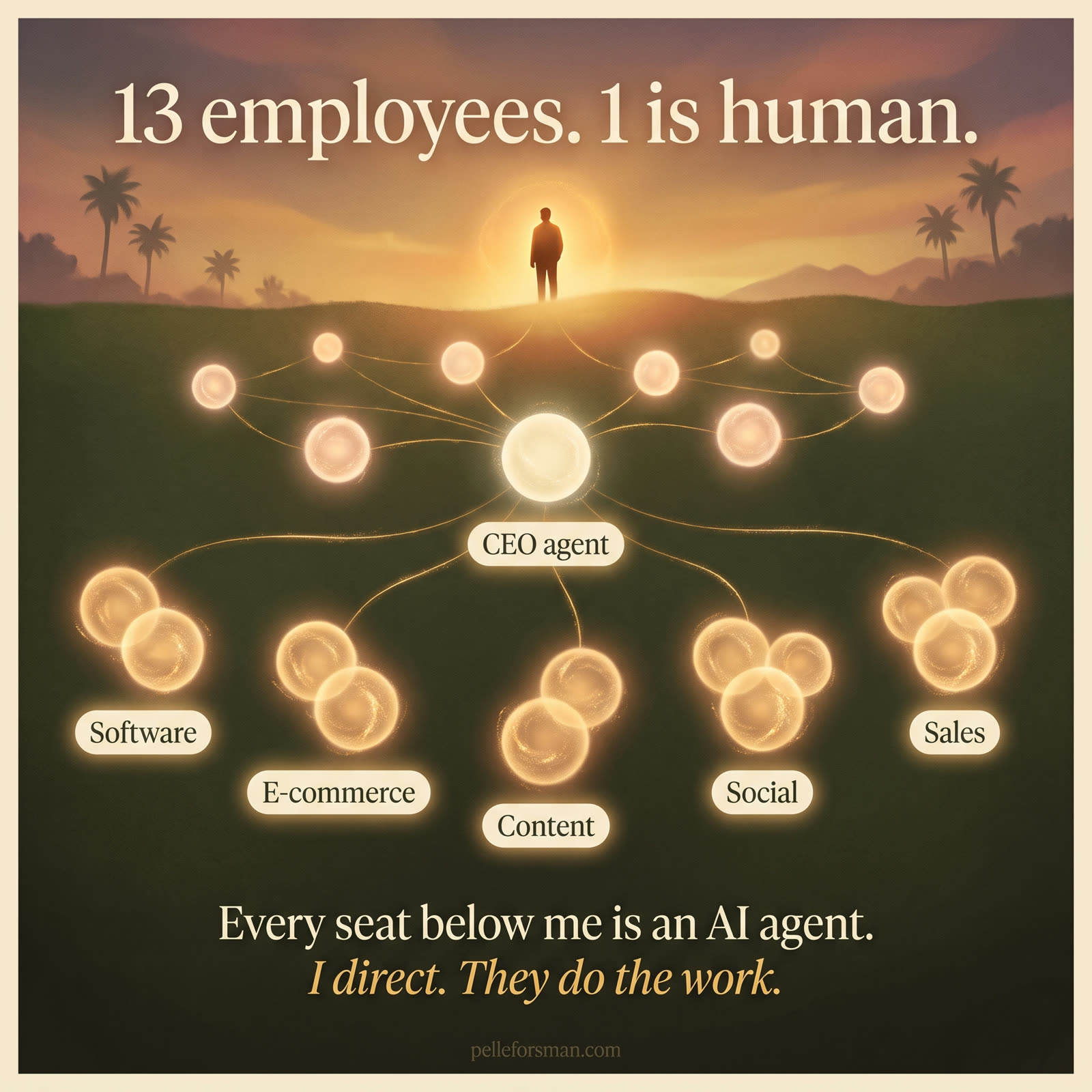
What does the chart actually look like?
Me at the top. Directly under me, an AI that works like an operations manager: it keeps every part of the business moving, checks the other AIs’ work, and briefs me each morning on what needs my attention.
Under that, five departments: software, online stores, content, social media, and sales. Every seat in every department is an AI agent doing that job.
What do they actually do all day?
Real work, not demos. They write the code behind my products, code I review before it ships to customers. They run the online stores. They publish around 10 posts a day across my brands. They prepare priced sales offers I can send.
And my job is real work too: I review and approve everything that matters, money, publishing, anything a customer sees. Nothing important moves without a human yes. I direct, they do, and I take responsibility for all of it.
Why build it this way?
People ask what my “AI strategy” is. This chart is the answer. Not a chatbot bolted onto an existing business, but an operation built out of AI agents from day one, with one human sitting exactly where the judgment lives.
Does it always work? No. Last week the content seat posted the same quote five times in one day before I caught it, and my job was to spot the gap and rewrite the rule so it can’t repeat. That review-and-correct loop is the real work now, and I document those failures here too. But the shape holds: one person’s time goes into decisions, taste, and responsibility, and almost none of it into production.
I build AI agents that run entire departments, and I document the whole build here, what works and what breaks. If you want the same agents installed in your own business, here’s how we’d work together.